Wednesday, May 28, 2025
"Past is key to the Future"
Thursday, February 13, 2025
Requiem for a Dream
(From the archives)
I stumbled upon a small piece of text hidden in my Google Drive, dating back to the summer of 2019 - it feels like a lifetime ago.
-------------------------------------------------------------------------------
As the Howrah Bridge rose above the horizon, she inched closer, clasping my arm. We knew the journey was coming to an end. A sudden uneasiness started to grow within me. I no longer sensed her tight grasp, the warmth from her purple sweater or swaying of the bus overtaking traffic on the Strand Road. A familiar aroma then filled my surroundings. As I tried to look further, my vision was blurred by a blanket of rain. The sensory tussle quickly came to an end as I felt another cold spray of water against my face. Waking up with a shudder, I noticed my wife towel-drying her hair after her shower. I stood up and hugged her tightly. Upon releasing she noticed tears in my eyes and asked, “Were you crying!?”.
“No…, it's your wet hair”, I lied.
-------------------------------------------------------------------------------
Sunday, December 1, 2024
Look! The cat is back........
".....Tu samajh nehi raha....woh bhi humare tarha hi hain.....pyaar paane ke liye aati hain kyuki khaana to ghar pe bhi milta hain...."
Monday, June 26, 2023
Philosophy of Science
A number of physicists in the 20th Century promoted the idea that beauty is a useful criterion of truth in fundamental physics? Also, intuition is sometimes mentioned as a good guiding light in research. Do you agree?
Sir Richard Feynman once said, “You can always recognize the truth by its beauty and
simplicity”. ‘Feynman diagrams’ bear witness to this statement as they greatly simplify the
representation of otherwise complicated interparticle interactions taking place at less than one
femtometer scale. One of the greatest and most famous theories- The General Theory of
Relativity which reduces gravity from being a force to being a feeling is at heart a huge
simplification. Last but not least, any hard-core theorist working on fundamental problems in
physics would agree that ‘The principle of Least action’ is the simplest description of our
Universe! But truly is it that simple? Are physicists romanticizing the idea of two rather ugly
equations precisely demonstrating how a cylinder rolls down an incline? Einstein himself
remarked, “Make everything as simple as possible, but not simpler”. It all begins quite intimately
with one proton and one neutron approaching each other to ‘interact’ then all of a sudden they
produce a bunch of offspring using up all the Greek alphabets! However, if we want to elaborate
on ‘interact’, it certainly is not simple anymore. At least not at face value (looks). Only when we
start to delve deeper do we realize that the way a particle (person) behaves is deeply connected
to some fundamental (internal) properties (traits) such as charge (say e.g. confidence), mass
(introverted), and spin (openness). At this point, some would stop digging deeper but a quantum
field theorist (or a psychotherapist) would love to know the origin of these characteristics. Thus
they find out about sub-particles like quarks and Higgs-bosons which are more fundamental
(like someone’s past experiences or upbringing) using which an entire macroscopic description
of neutron-proton collision (behavior) is possible! The journey from top to bottom and then back
to the top is a one-way journey and is factually the same for everyone. For example, it is a fact
that light always takes the shortest path between two points. This is a very deep concept, still, it
can be interpolated to a more common and straightforward fact- Light travels in a straight line (in
plane geometry). This fact is a result of Fermat's principle postulated in the mid-17th century
and remains valid in all geometries. This is what makes it appealing. The flexibility to
disintegrate it from complicated mathematics to simple terms is what makes a theory beautiful.
“Nature conceals her secrets because she is sublime, not because she is a trickster”-Einstein.
Hence, the truth lies in simplicity, flexibility, and transparency. Conversely, a theory with
exceptions (detours along that journey) ends up being ‘truly’ complicated and too incredible to
believe.
Of course, as the old saying goes, “beauty is in the eye of the beholder” (Molly Bawn by
Margaret Wolfe Hungerford, published in 1878), everything boils down to the group of people
(beholders) to judge whether a theory can be labeled as truly beautiful or oversimplified or
unnecessarily complicated. But ‘facts’ or in some cases ‘universally agreed upon notions’ are
common to any arbitrary group of investigators and should be a natural consequence of that
theory (when verified in independent ways). The word ‘simple’ or ‘beautiful’ when used without
caution can become a misnomer. In reality, all ideas or concepts can be complicated. But what
makes some of them truly beautiful is their internal self-consistency! Beautiful theories are built
from first principles, they are mathematically sound and they can properly explain a certain
physical phenomenon across all scales! Such lofty expectations, which come with truly ‘beautiful’
Theories often end up describing fundamental physics because she (nature) is sublime. And
such beauty and simplicity are evident at any stage the enthusiast decides to stop along the
round-trip journey.
Intuition, in my opinion, paves the pathway for developing ideas. Without intuition, it is
hard to begin working on a fundamental problem. Since genuine intuition originates only from a
mind which is whole-heartedly immersed in specific thoughts, we can safely say it can be a
guiding light for research. As rightfully stated by Einstein, “The only real valuable thing is
intuition; The intellect has little to do on the road to discovery. There comes a leap in
consciousness, call it Intuition or what you will, the solution comes to you and you don't know
how or why”. While the science of molecular bonds was comparatively well known in the early
19th century, it was the dream of a ‘snake’ catching its tail that allowed Kekule to carry forward
the known facts of chemistry to discover the structure of benzene! Newton’s mind was entirely
into Galileo's works on dynamics when he happened to notice the fruit fall. This stimulated his
mind to attach the idea of an invisible force pulling everything towards itself. Of course, it was
followed by mathematical rigor, which justified everything. Taking things a little further, Einstein
famously said that the greatest feeling of his life was witnessing a man falling from his roof! His
intuition took him from being an external observer of falling objects to actually being the falling
object. This very idea is now the fundamental building block of the General Theory of Relativity,
that is, gravity switches off for a body under constant acceleration! Hence, I strongly believe in
the notion that all the greatest ideas or theories are a result of small eureka moments. At every
stage of formulating an idea or theory, those eureka moments get validated by already-known
facts. ‘Intuition’ is what stitches two sets of (sometimes unrelated) facts. But oftentimes, our
‘sixth sense’ could be fooling us and everyone else. Borrowing from Wikipedia the Monty Hall
problem states, “Suppose you're on a game show, and you're given the choice of three doors:
Behind one door is a car; behind the others, goats. You pick a door, say No. 1, and the host,
who knows what's behind the doors, opens another door, say No. 3, which has a goat. He then
says to you, "Do you want to pick door No. 2?" Is it to your advantage to switch your choice?”.
Even Though our gut might be telling us, “Stick with your choice”, mathematics has shown that
it's always worth switching which has the higher probability to win! The problem is
counter-intuitive when we extend from three doors to say one-hundred doors. When the host
reveals 98 doors that have a goat behind them, our gut will be telling us to switch from our initial
choice. Hence to examine whether our ‘sixth sense’ is not fooling us or others, it must be
followed by a proper examination. Without proper testing, intuition must not be promoted as true
science.
I am currently working on accretion around supermassive black holes called Active Galactic
Nuclei (AGNs). I study them in the X-ray energy range. There is a lot of room for intuitive ideas
in this field especially because it is very model dependent as of now. The X-ray observational
community still doesn't have access to good-quality data because it is difficult to observe X-rays
from an engineering point of view. Hence, we look forward to innovative ideas which can better
explain not just in X-rays but also in the full electromagnetic spectrum, since AGNs shine across
all wavebands. We know very little about the space near black holes. Existing theories provide
the foundation for building intuition which can then be mathematically modeled and fitted to
data. Light rays get bent near the blackhole and focussed on the accretion disk which then gets
reflected. This was an initial guess back in the 70s. Reflection changes the polarization state of
a wave (whose theory was already known for a century) and this simple fact has been
confirmed today with the help of state-of-the-art telescopes. This is one of the very many ideas
which is taking the field forward despite its shortcomings. However, it is worth mentioning that
our results are true only if we believe the data being received by highly sophisticated machinery
located thousands of kilometers from us and operated by space agencies is correct! If not, we
must like science fiction! But fundamentally speaking, the world operates on our faith. Without a
certain amount of faith, existence is meaningless. I have faith in the structural engineer who
designed my building. I take it for granted that NASA is not hiding from us the fact that an
asteroid is going to decimate our city by the next dawn. A certain amount of (blind) faith is what
keeps me going in this field of research.
To sum up, despite its limitations, intuition appears to be a crucial part of human thinking,
according to research. The ability to link seemingly unrelated events is said to aid us in
understanding the chaos of the outside world, while others contend that it is essential to our
ability to perceive events immediately.
Sunday, February 19, 2023
Schönbrunn Palace
While fowl hunting in the Katterburg estate of Austria, Emperor Matthias, third son of archduke Maximilian, discovered a "fair-spring" or Schön-Brunn in the middle of a forest which led to its present-day name. Schönbrunn Palace is one of the main attractions in Vienna, luring scores of tourists from all corners of the world. Blended in its architectural magnificence is the brilliance and foresight of a powerful woman, the heiress to Emperor Charles VI, Maria Theresa.
Maria Theresa was the daughter of Emperor Charles VI and Elisabeth Christine. They were the ruler of the Habsburg empire in Austria. Having lost all hopes of bearing a son, Emperor Charles and his wife decided to find a suitable match for Maria Theresa, who could rule on her behalf. She was then married off to Franz Stephan of Lorraine.
Although deeply in love with Franz Stephen, Maria Theresa disregarded her father's idea behind this marriage. Rather she took full charge of the monarchy and led from the front, defending the Habsburgs against several invasions (Silesian war). In total, Franz and Maria had sixteen children. While being a fiery figure in front of adversities, she was also a strict mother to her children, imposing a proper catholic upbringing. The Schönbrunn Palace was the summer house of the Habsburgs.
- Don't carry handbags or bigger luggage. They are not allowed inside the main palace building. The same applies to plastic water bottles. You will definitely feel thirsty so either buy from some shops like the one near the zoo gate or just drink from the water spring behind the Gloriette.
- The entire compound will easily take two days to see. So plan accordingly if you want to see literally everything.
- If you don't have a mobile network, there is open Wi-Fi on the right side of the main entrance gate.
- Visit during September/October. It will be mildly cool at the same time being sunny.
Saturday, December 24, 2022
City of Joy
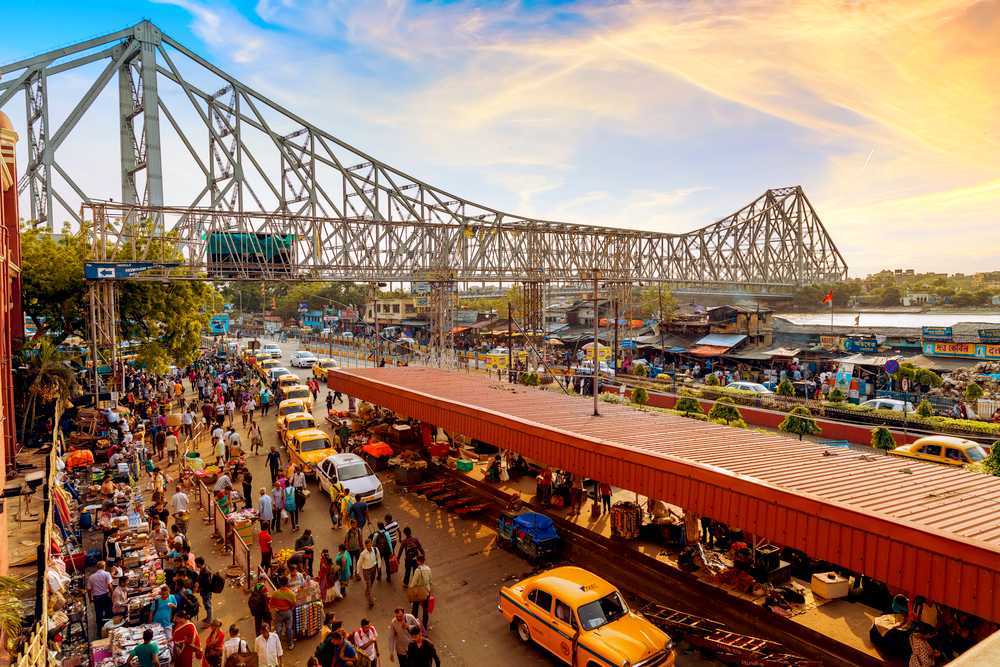
This is the Howrah Bridge (in Kolkata) viewed from a departing airplane at midnight. If one stretches their imagination a little, one will notice that the bent shape of the Howrah Bridge resembles a subtle smile. She is smiling back at you as you leave the city for another city. She wishes you the very best for your future.
However, secretly, She also knows for a fact that no matter how modern and flashy other cities are, they won't be a city with a 'heart'. The reason why Kolkata is called the "City of Joy" is because Kolkata is a city with a heart, with a soul.
Here is my city in pictures. I have tried to uphold the essence of Kolkata, which always refuses to give up its originality and integrity in the face of surmounting pressure.
1. Howrah Bridge (obscurely known as Rabindra Setu) is built on the Ganga river. It was imagined by George Turnbull in 1935 and opened in 1943. It is currently the sixth-longest cantilever bridge in the world. On the left side of the bridge is one of the busiest railway stations in the world- the Howrah Railway Station. Do you notice the iconic yellow taxis? As of now, it only operates in Kolkata.
3. MG road or Mahatma Gandhi Road. If you ask me, this has got to be the most chaotic road in the whole world! But despite all chaos, everything somehow works. It connects important places like College Street, Presidency University, Sealdah Station, and Hatibagan. The Barra-bazaar is located here and is a huge flea market exploited by wholesalers across North India.
7. Great personalities: In case you stumbled upon these famous names, they were from Kolkata or were closely associated with the city...(By no means this list is exhaustive. It is impossible to list all the famous personalities in a single post.) I will keep complementing it from time to time.
Satyendra Nath Bose. The founder of Bose statistics and Bosons (half of the fundamental particles in the standard model) is named after him. He proved the Planck Radiation formula without any ad-hoc assumptions or classical theory but using only pure mathematics. He closely collaborated with Albert Einstein and developed the theory of Bose-Einstein Condensate.
Sarat Chandra Chattopadhyay. He was a Bengali novelist and short story writer of the early 20th century. Notable works: Srikanta, Choritrohin, Devdas, Parineeta, and Pother Dabi. His works have been translated into several Indian languages and also adapted into movies (Parineeta and Devdas).
Friday, August 26, 2022
It does not die
July 2022:
A typical rainy day in Kolkata. Since dawn, it had been raining periodically leaving behind a damp setting across the city streets. I found myself standing in front of the College Street book market, with an umbrella in one hand and a list in the other.
Out of the very many iconic places in the city, College Street has seen the least amount of modification over the years. Nothing has changed except for the introduction of UPI payment (online payment) by shopkeepers now. The streets stay littered the same way, the jolly 'Jhal-muri' uncle never left his spot in front of Presidency University, and the 'ghugni' sold at College Square tasted exactly the same as it used to, three years ago. Time seems to have frozen in this place. The streets have survived the pandemic, the deadly 'Amphan', economic meltdown and so much more. But somehow the love for books among Bengalis has kept this place alive.
Legend has it that there isn't a book in this world that is not available at College Street. Who knew that day I would be putting this old adage to the strictest of tests?
Among the seven or eight books listed, I was particularly looking forward to two books. La Nuit Bengali by Mircea Eliad and It does not die by Maitreyee Devi. I wouldn't call myself a romance reader but these two books were unique in some respects. To begin with, they are true accounts set in the colonial Calcutta (now called Kolkata) of the 1930s. Secondly, the part which attracted me the most was the backdrop behind these two novels. In La Nuit Bengali, Alan (represents Mircea Eliad), a 23-year-old Romanian engineer describes his romantic adventures involving a sixteen-year-old Maitreyee Devi. However, their love ends in tragedy. Forty years later, Maitreyee Devi finds out that a book has been addressed to her by Mircea Eliad. She then writes It does not die, where she accounts for her side of the entire affair and how she had perceived all that had transpired. In sorts, It does not die is a reply to La Nuit Bengali.
Starting off from the right-hand side of the book market, I asked every shop if they had them. Except for one seller, no one had ever heard of those two books. I was shocked, I must say. I searched the entire right flank of books but with no success. Not even a silver lining. It was a tough pill to swallow considering I was standing at the legendary College street. Now I went to more branded stores like Deys, National Book Store, Kotha-o-Kahini, and others. None had them. I checked my phone, it was 13.30 pm. I had plans of catching the 14:10 Tarakeshwar local train from Howrah station but that seemed impossible now. On top of that, the sky became overcast. Nevertheless, I was already drenched in sweat so it would have made no difference.
As I was making my way out of the busy market along the left flank, a very old bookshop on the right caught my eye. For a moment I stood there and murmured to myself-"let's give it one more try". I handed the owner, a list that had the names of the two books. Suddenly his eyes started scanning the cobweb-filled dusty bookshelf near the ceiling. Then he signaled the helper boy to pick out two books from the left. A minute later, I could see, resting in front of me, La Nuit Bengali and It does not die. "Ask, and it shall be given to you; seek, and ye shall find; knock, and it shall be opened unto you". College Street had passed its test, like always! Likewise, the bookshop owner was stunned to see someone come to buy these very rare books. He said they have been sitting on the shelf for over 6 years. I thanked him and then made my way toward College Square.
The rain was now reduced to a light drizzle. I took this opportunity to sit on the benches and glance through the books. I could never fight this childish urge to read a few pages of a book, the moment it was bought.
Tuesday, August 16, 2022
The Fire
The Fire
The jungle was getting thicker, miles and miles a stretch;
Calm and eerie, murky and green,
The sun was nowhere to be seen,
And no shelter as far as eyes can fetch.
Not an animal, not an avian;
Just owls,
Scary growls,
And someone walking towards oblivion.
Rest was craved, by limbs not head;
With mud and blood underneath,
Not another feet,
I decided to lay in grassy bed.
As I lay, under the leafy sky;
With a bon fire, and
Some barbwire,
A cynical thought crossed by.
What if all the miles,
Trodden black,
Becomes a mere useless act?
No way back, no way side
Forward is the only abide.
What if the woods never end?
Only gets darker, and
Further,
With every bend.
Only then I noticed My fire burn,
Sharp and bright,
Trembling with might,
Assuring me nothing could harm.
Little a flame, as it is;
Doesn’t care,
How big its flare,
Dances in harmony at ease.
So, I learned a valid lesson;
As way,
leads to way,
Let thy fire inside never lessen.
When at length that day views,
Bringing reward, and
Mental accord,
Be sure to recall your muse.
Biswaraj Palit.
9-6-2020
Friday, July 1, 2022
Our Dreams
All of us dream. Or at least have dreamt sometime in the past, of a perfect future. A future where we secure all that we ever wanted. Like a kid at an ice cream parlor, we garnish our cups with all kinds of flavor combinations. Livelihood in this make-believe castle of ours is devoid of adversities. But, alas! life isn’t your Myfroyoland. Time exposes the subtle non-linearities in fate that delay our achievements. Our roads become increasingly twisted and undulating, making us humble and sober in the process.
In the
poem, “Our Dreams”, I take you through a figurative journey by introducing a
metaphorical woman who represents the ‘woman of my dreams.’ I spend some
fanciful moments. Soon chaos strikes in the form of thunder, which parts us. However,
life needs to and must go on. Like a seafaring vessel fighting through gutsy waves, we
have to move ahead with a clear goal in mind.
The poem
may be perceived as slightly pessimistic in the sense that I never actually talk about achieving ‘the’ goal. The poem may end with a very
unappealing/cliched climax, but I feel that it’s our journey through life that
is the most memorable. Once a goal is reached, we are momentarily contented and soon move on to the next goal. The bottom line is the fact that life weaves
its own stories as we tag along. Far in the future, when the time is right, we may be living the life that is perfect for us even without realizing much.
Rudyard
Kipling quite eloquently expressed similar sentiments in his celebrated poem ‘
If ’. A few favorite lines are
If you can
dream—and not make dreams your master;
If you can think—and not make thoughts your
aim;
If you can
meet with Triumph and Disaster
And treat those two impostors just the
same;
(Follow this link to read the full poem: https://www.poetryfoundation.org/poems/46473/if--- )
I agree
with many that ' If ' is a very idealistic poem. A poem that is very difficult to
emulate in real life. But even if we incorporate some of the mentioned advice if not all, we will find ourselves in a comfortable world.
I hope you like my poem. Wishing you
a gentle read!
Our Dreams
Over the terrace,
against the ‘scape,
Who is she, that fix’d
me in gape!
Stretched my sight, as
far as I could,
What a beauty! There
she stood.
Fair and slim, hair
flying,
O lucky wind, and here
‘m dying.
Happy is the sun, the
moon and the stars,
As their light has
shown a beauty so scarce!
Turning her head, she
caught my eyes,
Like the dead, my gaze
was ice.
So, did the winds stop
for a while?
Or was my soul numb and
fragile?
A beam of smile crossed
her lips,
Like a breeze bent row
of pink tulips.
Wished we meet, before
heavens retreat,
For without ‘tis like
dying incomplete!
Soon some clouds, from
nowhere came
Startled by thunder,
our moments became.
Oft she ran to shelter
from hail,
As my dreams were meant
only for fails.
Not just me, for many
of us,
Dreamt and tranced, a
similar farce.
For reality is like, a
sailor’s plight,
Sea whose ebbs or flows,
it must fight.
Even though day
promises many a sight,
Dusk sends men yearning
for light.
But ships don’t bother,
as long as water,
Which it can drink, but
be only sober.
So, keep on sailing,
mast held high
Toiling hard days,
without a sigh!
Biswaraj Palit
Wednesday, June 29, 2022
21st Century Breakdown
One of my favorite poems - " Five ways to kill a man" by Edwin Brock ends in a very realistic manner. I quote the last stanza below :
"These are, as I began, cumbersome ways
to kill a man. Simpler, direct, and much more neat
is to see that he is living somewhere in the middle
of twentieth century, and leave him there."
Reading this poem, one embarks on a historical journey through time starting with the crucifixion of Jesus to the end of World War II. In the end, the poet dispenses with any traditional means to kill a man (or a woman or any living entity for that matter) by stating that living in the twentieth century is suffering in itself. One is exposed to mental dissatisfaction, diseases, and loads of other socio-economic problems. These are not 'cumbersome' ways in that it is not carried out by one person or a group or that its effect is instant. The entire humankind has played a role in each other's sufferings, leading to a slow, painful death.
Edwin Brock had passed away before the start of the twenty-first century (in 1997). Nevertheless, the concluding stanza of his poem is still relevant in this century. I have tried my hand at writing a poem for the people thriving in the twenty-first century. The title of this blog has been naively borrowed from a famous song by Greenday. The title of my poem is Payback.
Payback
Who could have told,
long could one live?
Who could have thought,
time had come to leave?
For a century later, with renewed vigor,
Worlds have revolted, wants us no longer.
For mankind had been a bitter germ,
With sins, worser than every turn.
Wars settled fences and nukes their might,
O’widowed wife, orphaned child and their plight!
Crimes akin wars, soul to soul,
Murders, abuse, and likes none could console.
Built both cars, swim and fly,
and many more things our thoughts defy.
So claimed the leader,” Nothing to fear,
Even if end is near,
Us shall eradicate
For science ‘twas adequate”.
Smirked in the corner, Mother Nature,
“Poor unthinking souls here,
You have done what you think enough
Let me show what methinks you deserve”
Thence came virus, all over the globe,
while some quakes started to unload.
Also, the ice, wanting to slide,
Sea was now a devil in disguise.
Bushfires unmuted for days past,
All locked with doors tightly cast.
Bays faced storms,
And fields with locust swarms.
As deaths go past unthought counts,
Hunger and cries, and tensions surmount.
The leader, whos’ plan seemed was clear,
Can now be seen, crying “Save O’lord us dear”
But He has seen, seen what may,
Only be called devils’ play.
Thus, we reap what we sow,
As all wait for wraths to forego.
Biswaraj Palit
Comment and let me know your thoughts!
Bye.
Physics poem
The year 2020 was unique in so many ways. The whole world was busy fighting a never before seen virus outbreak. Streets were filled with ambulances and hospitals with dead bodies. Every sector, be it professional or academic, had come to a standstill.
Among all the chaos, my only solace was physics. I was rather enjoying the ample time available to read out-of-the-syllabi books (Feynman Lectures and MIT OCW), revisit unclear concepts, etc. One fine night, out of nowhere it struck me that I should write a poem on physics. The poem should touch upon all the great minds and their works that have shaped the world as we see it today. Thus I began:
Physics
Derived from Latin or Greek, some say
I rule the world from night to day.
Hardly a king, hardly a queen,
I was how Archimedes solved the gold thing.
All round and around the sun
Earth goes by Kepler’s cubic term
“No!” said The Church, “Its’ all flat,
Winged angels carry it on their back”.
Then came revolution, came a great law
Inverse square term became the new awe
Newton gave gravity, Coulomb gave electricity
Mustn’t forget how Hooke provided all their elasticity.
So asked Roentgen, what’s that green glow?
Later Marie and Pierre found it in Uranium, only low.
How charges behaved, which Maxwell knew,
In four compact equations easy and few.
But wheels of revolution sought to turn,
Not of politics but scientific upturn
The atom was split, and so were the minds,
As electrons and protons were of another kind.
Planck came forward with an outrageous guess,
For blackbody radiation and something else.
None knew then, what quantization meant,
It took decades only after Schrödinger dreamt.
Parallel to these, ground was breaking,
For someone was working on speeds that were breathtaking.
Gravity was seemed quite wrong, to no one
But Einstein alone.
He gave a new theory, not much understood
Maybe after a century, someone would.
“Coming back to Hydrogen atom”, said Neils Bohr,
“Why not stationary orbits and solve Rutherford”.
Cat’s life hangs in balance with equal probabilities, claimed Erwin
“What are you getting at”? Einstein grins.
But came an equation, like nothing before,
Only a new mathematics could support it anymore
Determinism started to gather dust,
Now position will be certain at the momentum’s cost.
Quantum theory started becoming the story,
Along came many writing their own theory.
The atom went larger as they delved deeper,
Finding leptons, hadrons, bosons and all peculiar
Far in the east, a poor physicist,
Stopped in his tracks with a crazy insist.
A new kind of matter, then opened its gate,
They call it The Bose-Einstein condensate.
Fundamental forces named along,
Gravitational, Electromagnetic, Weak and Strong.
As time went by, complexity arose,
So came Feynman, simplified in a prose.
His famous diagram was all one needed,
To realize how subatomic particles, did it
Lot about miniscule, what about outer space,
Did someone figure the relativity case?
Reached the invisible ripple and made a noise,
Coming from a black hole to LIGO’s sophisticated toys.
Followed by a greater news, only a blurry image,
Dark hole in the center, disk was orange.
So many scientists, so many stories,
I have failed to tell each of their glories.
So, forgive me all those,
Whose works I could not compose.
Then asked a layman,” you must stop”,
Physics replied,” not until my breath drops”.
Biswaraj Palit
9-6-2020
When I finished writing, I had only sent it to my then-girlfriend. I had no intentions of posting it on social media or any other platform. Delighted by the poem, she insisted that I post it on Facebook. Thus, it already exists on my FB wall long before I publish it through this blog.
Thank you for the patient read. Hope you all like it. Let me know what you think of it in the comments.
Bye.
"Past is key to the Future"
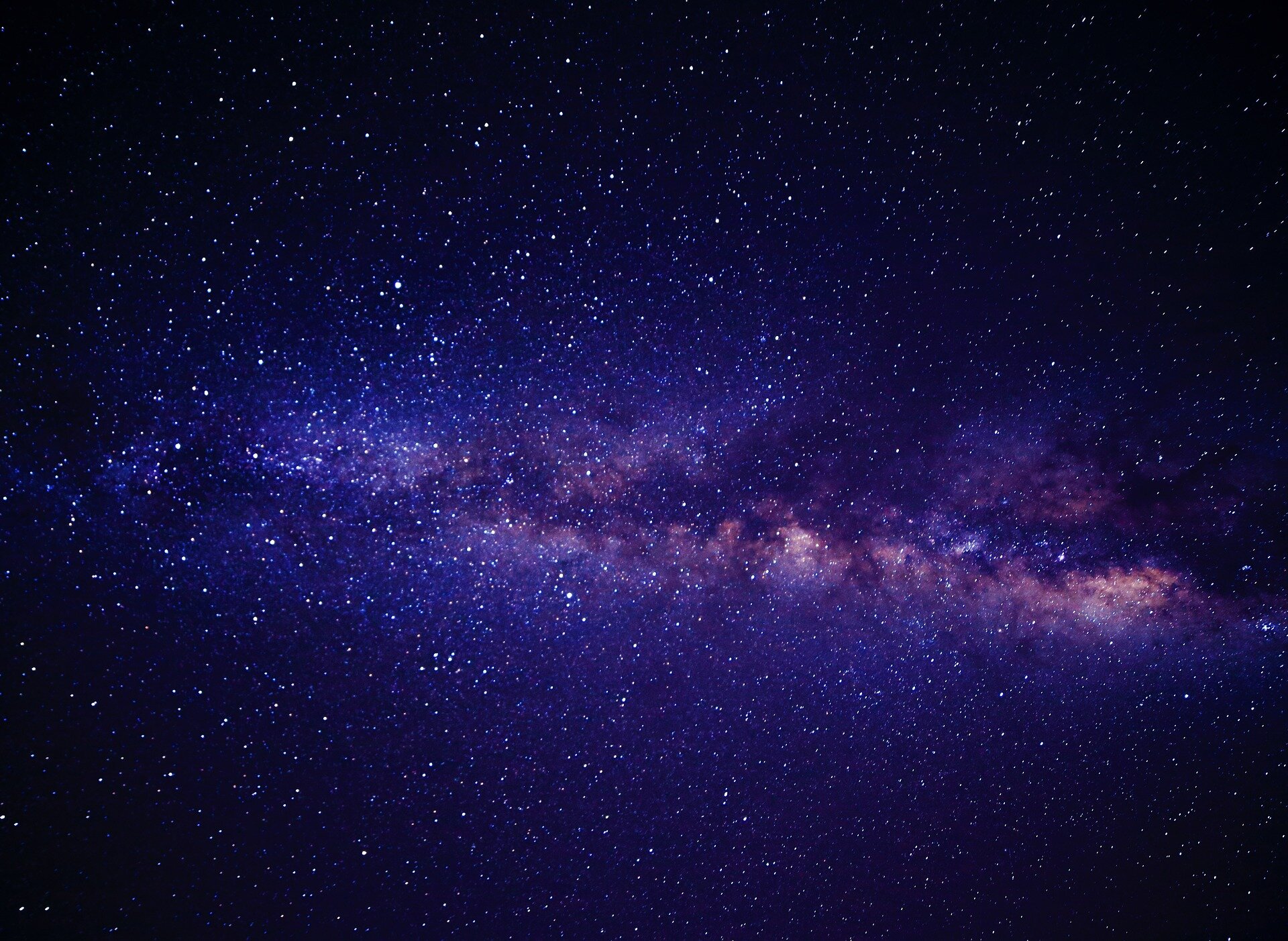
( Source: Google images ) Much like looking at rock strata formed over millions of years, observing distant stars, galaxies, or cosmic event...
-
The Fire The jungle was getting thicker, miles and miles a stretch; Calm and eerie, murky and green, The sun was nowhere to be seen, And n...
-
The year 2020 was unique in so many ways. The whole world was busy fighting a never before seen virus outbreak. Streets were filled with am...
-
( Source: Google images ) Much like looking at rock strata formed over millions of years, observing distant stars, galaxies, or cosmic event...


.jpg)